Save the Bro 2
Brightika, Inc.Adventure
4.355.00 Reviews
- Version
- 0.1.168
- Installs
- 1.00M
- Age Rating
- Everyone
Screenshots
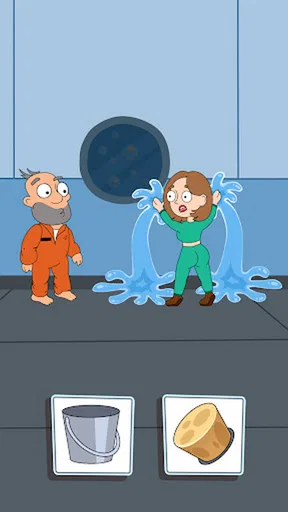
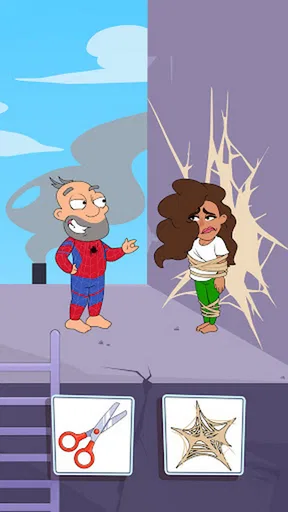
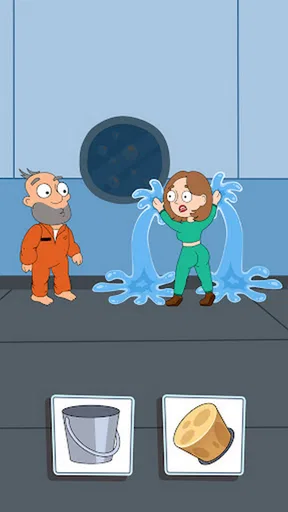
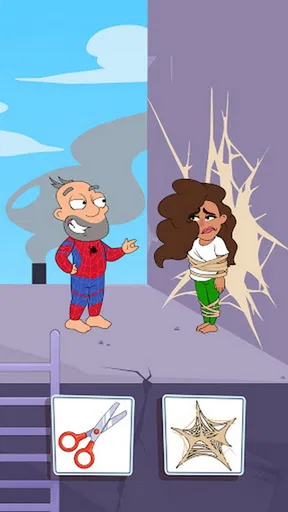
Our Review of Save the Bro 2
 Analysis by Appyee
Save the Bro 2 is an adventure game built around quick, strange decisions. I played it as the kind of short-session title that asks me to look at an awkward situation, choose between unusual options, and see whether my decision helps rescue Bro. That simple setup gives the game an immediate rhythm: read the scene, make a choice, watch the result, and try again when the outcome is not what I expected.
What makes it appealing is not deep exploration or a complicated control scheme. The attraction is the small burst of curiosity before each decision. I wanted to know what the game considered the “right” answer, and I also enjoyed testing the obviously odd option just to see how far the situation could go. If you like light adventure games based on choices rather than long combat or demanding puzzles, this is an easy title to understand.
The game comes from Brightika, Inc., is free to start, and is suitable for Everyone. It has reached over one million installs and holds a 4.6 average from around fourteen thousand ratings, which suggests that its quick decision format has found a substantial audience. I would still treat those figures as a sign of broad interest rather than a guarantee that every player will enjoy the same style of humor and repetition.
How the rescue format feels in everyday play
The central loop is deliberately direct. I do not need to learn a large set of controls before beginning, and the store summary makes the main purpose clear: help rescue Bro by choosing a weird decision. That focus is useful when I only have a few minutes. I can open the game, handle a small situation, and stop without committing to a long mission or remembering a complicated objective.
A realistic use case is a short wait before an appointment. I might have enough time for a handful of choices but not enough patience for a story-heavy role-playing game. Save the Bro 2 fits that gap because the decision itself creates the tension. The question is usually not whether I understand the interface; it is whether I can predict what the game considers sensible in a deliberately ridiculous situation.
That design also makes the game approachable for people who are not regular adventure players. Someone can pick it up without knowing genre conventions, character builds, or elaborate maps. The age rating of Everyone reinforces that accessible presentation. I would be comfortable suggesting it to a family member who wants something playful and uncomplicated, while still explaining that the humor and strange choices are the main point rather than a deep narrative.
My first useful tip is to slow down before tapping. The unusual option often looks tempting because the game is built to make me question the obvious answer. Instead of treating every screen as a reflex test, I found it more enjoyable to inspect the situation and think about what each choice is trying to provoke. This does not turn the game into a traditional logic puzzle, but it makes the decisions feel more deliberate.
A second tip is to treat failed choices as part of the entertainment instead of immediately viewing them as wasted progress. The game’s appeal depends on seeing how different decisions affect the rescue attempt. If I only select the safest-looking answer, I miss some of the playful experimentation that gives the format its personality. On the other hand, players who dislike replaying a scenario after a poor choice may find this approach irritating rather than funny.
Progress feels light, but the decision pressure is real
The pressure in Save the Bro 2 comes from uncertainty rather than difficult controls. I often understand what the scene is asking me to do, yet I am not always sure which response will produce the best result. That small gap between recognizing the problem and predicting the outcome is what keeps the loop moving. It is a compact form of suspense, designed for a game that wants me to make choices quickly.
There is a trade-off here. Because the format is so focused, the experience can feel repetitive if I expect a broad adventure with exploration, character development, or a large world to investigate. This is not the game I would choose when I want a long evening of discovery. I would choose it when I want a series of bite-sized situations that can be enjoyed independently.
The current version is 0.1.164, and the game was released on October 29, 2024. Those details matter when setting expectations: I see it as a relatively early, actively evolving-style experience rather than a finished traditional adventure campaign in the console sense. I would keep my expectations centered on the choice loop and not assume that the title is trying to compete with expansive story games.
Another practical consideration is device compatibility. The listed minimum is Android 7.0, so owners of older phones should check their system before spending time looking for it. For a free game, that small check is worthwhile, especially if the phone is used by a child or shared among family members. The Everyone rating makes the game broadly approachable, but the person installing it should still decide whether this particular kind of comic decision-making suits the intended player.
Spending, pressure, and what I can judge fairly
The game is free to download, with in-app purchases listed at $4.99 to $7.99 per item. That gives me a clear starting point for the spending question: I can try the core experience without paying at the door, while optional purchases may become relevant during play. I would not describe the game as completely cost-free, because those purchase options are part of the experience readers should know about before installing.
I also would not claim that spending is necessary or that purchases create an unfair advantage. The available purchase information identifies the price range, but it does not establish how often offers appear, what each item does, or whether a purchase changes progress. The fairest advice is to approach the game as a free trial of its decision format and make any payment only after deciding that the loop is worth supporting.
For parents, the practical step is simple: review the device’s purchase controls before handing the game to a child. The Everyone rating describes the content age level, not a promise that accidental purchases are impossible. I would also explain that free installation and optional paid items are separate things. That short conversation prevents a common misunderstanding without assuming anything about the game’s purchase design.
For my own use, I would set a boundary before playing. If I am enjoying the choices, I can continue without feeling that I must buy something immediately. If the game begins to make progress feel uncomfortable without a purchase, that is the point where I would pause rather than pay automatically. Since each item is listed between $4.99 and $7.99, an impulse decision is still meaningful even though the game itself costs nothing to start.
Is the experience competitive or pay-to-win?
Save the Bro 2 does not present itself to me as a competitive multiplayer game. Its premise is a personal rescue challenge driven by decisions, so the usual questions about leaderboards, player-versus-player balance, and paid combat advantages do not seem central to the way I play it. I judge its fairness less by competition and more by whether the choice loop remains enjoyable without spending.
That distinction is important. In a competitive game, a purchase can affect whether another player has a fair chance. Here, the more relevant concern is whether paid items interrupt the private rhythm of solving or experimenting. Because the exact role of the purchases is not established in the information available to me, I would avoid calling the game either generous or aggressive about monetization. I can responsibly say that the listed prices deserve attention, while the competitive fairness question is largely beside the point for this format.
Compared with a conventional puzzle game, the title offers less emphasis on fixed solutions and more emphasis on interpreting a bizarre scene. Compared with a narrative adventure, it offers shorter interactions and less commitment to a large plot. Compared with a competitive mobile game, it appears better suited to solitary, low-pressure play. Those comparisons help clarify the audience: choose this when you want playful decisions, not when you want strategic ranking, extensive exploration, or a serious story campaign.
The strongest fairness advantage is that the basic idea is easy to understand before I invest much time. I know I am downloading a rescue-themed choice game, not a hidden management simulator. That makes it easier to decide whether the format works for me. The main fairness limitation is that a free entry point can make me curious enough to continue before I know how the longer progression and purchase prompts will feel.
What I would check before committing
I would start by asking myself three practical questions. Do I enjoy making intentionally odd choices? Am I happy with short, self-contained bursts of play? Can I ignore optional spending unless I independently decide it is worthwhile? If the answer to all three is yes, the game has a good chance of fitting into my routine.
I would skip it if I need precise, skill-based controls, a deep inventory system, or a substantial world to explore. I would also skip it if repeated decision scenes feel like padding to me. The game’s simplicity is its strength for casual sessions, but that same simplicity can become its weakness for anyone seeking layered strategy.
One non-obvious way to use it is as a quick social game without turning it into a formal multiplayer experience. I can show a choice to a friend, ask which option they would select, and then compare the result. That works because the unusual decisions invite conversation. It is not the same as having built-in competitive play, but it gives the game more life when I am sharing a phone or passing time with someone nearby.
I would also use the game as a test of my own decision habits. When I choose the obvious response repeatedly, I can see whether I am playing cautiously or simply refusing to experiment. When I choose the weird option every time, I may discover that novelty is guiding me more than logic. That small self-awareness is not a formal feature, but it is one of the more interesting ways to get extra value from a simple choice-based game.
There are still sensible unknowns that affect a long-term recommendation. I would want to know how much variety appears after extended play, how frequently the same style of situation returns, and how optional purchases fit into progression. I would not fill those gaps with guesses. Instead, I would recommend installing it for the free starting experience, observing whether the decisions remain entertaining, and then deciding whether it deserves regular space on the phone.
My trust verdict after weighing the trade-offs
My overall view is positive but measured. Save the Bro 2 understands its purpose: give me a light adventure built around strange choices and the goal of rescuing Bro. It is easy to approach, suitable for a broad age range, and convenient for short sessions. The 4.6 average from around fourteen thousand ratings and more than one million installs show that many players have responded well to that formula, though popularity alone does not make it the right match for every taste.
I appreciate that the free entry point lets me judge the central loop before paying. At the same time, the $4.99-to-$7.99 purchase range means I would keep spending deliberate, especially if a child is using the device. I see no basis for labeling it pay-to-win, because the game is not presented as a competitive contest and the available purchase details do not explain a competitive advantage. My trust comes from being clear about that boundary rather than making stronger claims than the facts support.
If I were recommending it to a friend, I would say: try it when you want a playful distraction, enjoy testing ridiculous answers, and do not need a large adventure world. Give it a pass when you want demanding puzzles, deep strategy, or a carefully developed long-form narrative. The best reason to install it is the quick decision loop, not the promise of a traditional epic adventure.
For me, the game works best in small doses. I can open it during a spare moment, make a few choices, laugh at an unexpected result, and leave without feeling that I have started an enormous commitment. That is a modest goal, but the title meets it well. As a free adventure game from Brightika, Inc., Save the Bro 2 is worth trying for players who enjoy weird decisions and casual rescue scenarios, provided they keep optional spending in perspective and judge the longer experience for themselves.
Privacy and Permissions
See what permissions an app requests and how it handles your data.
- Wi-Fi connection information
- view Wi-Fi connections
- Other
- view network connections, full network access, control vibration, prevent device from sleeping, Google Play license check
Verdict
Strengths of Save the Bro 2
- Simple controls make it easy to start playing immediately.
- Short levels are convenient for quick gaming sessions.
- Funny animations add charm to the puzzle-solving experience.
- Progressive challenges help maintain interest over time.
- The game works well for casual players of different ages.
Limitations of Save the Bro 2
- Some puzzles may feel repetitive after extended play.
- Hints or extra attempts may be limited without watching ads.
- Difficulty can vary noticeably between consecutive levels.
- The game may become less engaging for experienced puzzle fans.
- Ads can interrupt the flow between completed stages.
Other Releases by Brightika, Inc.
View All

Factory: Idle & Tycoon Game
Strategy4.3
Similar Picks in This Category
View All
Roblox
Roblox Corporation4.2

Pokémon GO
Niantic, Inc.3.5

Ninja warrior: legend of adven
TOH Games4.6

Ninja Arashi
Black Panther4.6

Eyes - The Horror Game
Fearless Games sp. j.4.5

Critical Action:Gun Strike Ops
FPS Shooter & Action Game4.3
Frequently Asked Questions
What is Save the Bro 2, and how does the gameplay work?
Save the Bro 2 is a casual puzzle game built around short rescue challenges. In each level, you must choose the correct action, pull or interact with objects in the right order, and help the character escape traps, enemies, or dangerous situations. The controls are generally simple, making it easy to start playing, while the puzzles gradually require more observation and careful timing.
Is Save the Bro 2 free to download and play?
The game can generally be downloaded and played without an upfront purchase, but free versions may include advertising, optional purchases, or both. Ads can appear between levels or when you request hints and rewards. Before downloading, it is worth checking the store listing for the current pricing model, available in-app purchases, and whether certain content or bonuses require payment.
Does Save the Bro 2 require an internet connection?
Save the Bro 2 may allow you to complete at least some levels while offline, which is convenient for playing during travel or when mobile data is unavailable. However, advertising, rewards, updates, cloud features, or other connected functions may require an internet connection. Availability can vary by version and device, so test offline access after installation rather than assuming every feature works without connectivity.
Is Save the Bro 2 suitable for children?
The game is designed as light, accessible entertainment, with straightforward controls and cartoon-style presentation rather than realistic violence. Nevertheless, parents should review the age rating and privacy information because advertising, optional purchases, and external links may be present. Younger players might also need supervision when rewarded ads or payment prompts appear, even though the puzzles themselves are generally easy to understand.
What should I know about ads, permissions, and in-app purchases before installing?
Before installing Save the Bro 2, review the permissions requested by the app and compare them with what a simple puzzle game reasonably needs. The main interruption for many players is advertising, particularly when progressing through levels or collecting extra rewards. Optional purchases may remove ads or provide helpful items, so use device purchase protections if children will play and check the developer’s privacy details for data-handling information.
Play our best games!


